

On This Page
A clean home feels different. The kitchen counters are clear, the bathroom smells fresh, and there’s no mystery dust hiding behind the furniture. But getting every room to that point can feel like a huge project, especially when you don’t know where to begin.
If you’re wondering how to deep clean a house room by room, the easiest approach is to follow a practical checklist and complete one space at a time.
The good news? Learning how to deep clean a house room by room makes the job much more manageable.
Instead of trying to clean everything at once, you can divide your home into smaller tasks, work through each space systematically, and make steady progress without spending an entire week cleaning.
This guide includes a practical deep cleaning checklist for the kitchen, bathrooms, bedrooms, living areas, and other frequently overlooked spaces. You’ll also find a realistic weekend cleaning schedule, helpful tips for different surfaces, and simple ways to keep your home cleaner afterward.
Whether you’re preparing for guests, tackling overdue household chores, or giving your home a seasonal refresh, here’s where to start.
What Does Deep Cleaning a House Actually Mean?
Regular cleaning keeps everyday messes under control. You wash dishes, wipe countertops, vacuum floors, and put things away.
Deep cleaning goes further.
It focuses on areas that don’t receive much attention during a typical weekly cleaning session. Think dusty baseboards, refrigerator shelves, bathroom corners, and the space underneath furniture.
A thorough house deep cleaning usually includes:
- Removing dust from overlooked surfaces.
- Cleaning underneath and behind accessible furniture.
- Washing or refreshing washable fabrics.
- Cleaning inside frequently used cabinets and drawers.
- Removing built-up dirt from appropriate kitchen and bathroom surfaces.
- Vacuuming upholstery, rugs, and carpets.
- Cleaning doors, handles, light switches, and baseboards.
- Organizing clutter that makes routine cleaning difficult.
Deep cleaning doesn’t mean treating every surface with a disinfectant. The Centers for Disease Control and Prevention explains that regular cleaning with soap and water removes most germs in ordinary household situations. Disinfection is more relevant when someone is sick or there are additional health concerns.
The goal is a cleaner, more comfortable living space, using products appropriate for each surface.
How Often Should You Deep Clean Your House?
There’s no single schedule that works for every home.
A one-bedroom apartment occupied by one person will have different cleaning needs from a busy family home with children and pets.
As a practical starting point, consider a more thorough cleaning every three to six months, while handling frequently used spaces more regularly.
| Area | Suggested Deep Cleaning Frequency |
|---|---|
| Kitchen | Monthly or as needed |
| Bathrooms | Monthly or as needed |
| Bedrooms | Every 2–3 months |
| Living Room | Every 2–3 months |
| Home Office | Every 2–3 months |
| Closets and Storage | Every 3–6 months |
| Entire Home | Every 3–6 months |
These are planning suggestions, not strict health requirements. Adjust them based on visible dirt, household activity, pets, allergies, and individual needs.
If your home hasn’t had a thorough cleaning in several months, start with the rooms you use most. Trying to perfect every space in a single day often makes the process harder than necessary.
Essential Supplies for a Room-by-Room Deep Cleaning

Before learning how to deep clean a house room by room, gather the basic supplies you’ll need.
A small cleaning caddy can save repeated trips between rooms.
Basic Cleaning Supplies Checklist
- Microfiber cleaning cloths
- A vacuum cleaner with suitable attachments
- A broom and dustpan
- A mop suitable for your flooring
- A soft-bristled cleaning brush
- A long-handled duster
- A bucket
- Mild dish soap
- A suitable all-purpose surface cleaner
- A mirror and glass cleaner
- Separate bathroom cleaning cloths
- Trash bags
- A laundry basket
- Labeled storage containers
You don’t need a large collection of specialized cleaners.
For most routine tasks, a few appropriate products and good cleaning tools are enough. Follow manufacturer instructions for delicate surfaces, electronics, stone countertops, and wood furniture.
When choosing household cleaning products, the EPA Safer Choice program offers a searchable list of products that meet its ingredient standards.
Important safety reminder: Never mix different cleaning products. Read product labels, maintain ventilation, and store cleaning supplies securely away from children and pets. Use cleaning products only as directed.
Before You Start: Prepare Your Home for Deep Cleaning
A little preparation makes the actual cleaning process easier.
Step 1: Create a Simple Cleaning Plan
Walk through your house and identify which rooms need the most attention.
You might discover that your kitchen needs a complete refresh while the guest bedroom only requires dusting and vacuuming.
Make a short list of priorities.
For example:
- Kitchen and dining area
- Main bathroom
- Bedrooms
- Living room
- Home office
- Hallways and entryway
You can change the order based on your home and schedule.
Step 2: Declutter Before Cleaning
It’s difficult to clean a countertop covered in mail, bottles, and miscellaneous household items.
Start by removing objects that don’t belong in the room.
Use three simple groups:
- Keep in this room
- Return to another room
- Donate, recycle, or discard appropriately
Avoid turning this stage into a complete home organization project.
The purpose is to clear enough space to clean properly. You can reorganize closets and storage areas later.
Step 3: Work From Top to Bottom
Dust from higher surfaces can settle on furniture and floors below.
A practical cleaning order is:
- Accessible upper shelves and corners
- Furniture and countertops
- Lower shelves and baseboards
- Floors
Use a long-handled duster for reachable high areas rather than climbing on unstable furniture.
Finish floors last so you don’t have to clean the same area twice.
Step 4: Clean One Room Before Moving On
Deep cleaning becomes frustrating when you start five different tasks and finish none.
Choose a room, complete its priority checklist, and then move on.
For larger houses, dividing the work across two days is perfectly reasonable.
How to Deep Clean a Kitchen Step by Step
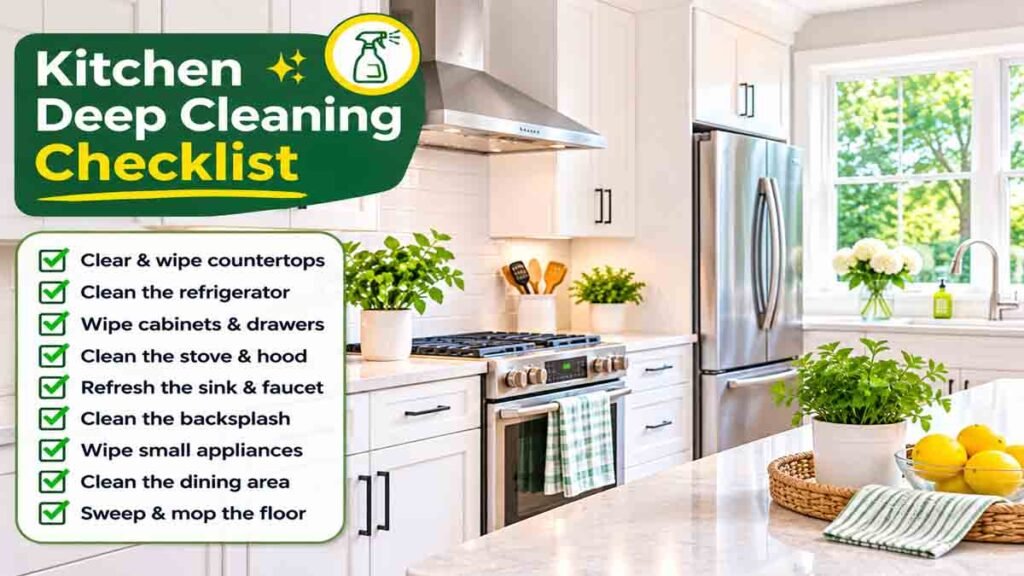
The kitchen is often one of the busiest rooms in an American home.
Cooking, meal preparation, groceries, and everyday family activities create opportunities for crumbs, grease, and clutter to accumulate.
When following a room-by-room deep cleaning checklist, the kitchen deserves extra attention.
1. Clear the Countertops
Remove small appliances, dishes, and unnecessary items.
Sort paperwork, food containers, and other objects that have collected on the counters.
Wipe the exposed surfaces with a product appropriate for the countertop material.
Be especially careful with natural stone, unfinished wood, and specialty finishes.
2. Refresh the Refrigerator
A refrigerator can look clean from the outside while holding forgotten food and sticky shelves.
Start by checking for expired food and unnecessary leftovers.
Organize items into groups, such as:
- Dairy products
- Fresh vegetables
- Fruits
- Condiments
- Prepared meals
Clean accessible shelves and drawers according to the appliance manufacturer’s guidance, keeping perishable food safely chilled during the process.
Before putting everything back, check that containers are closed and shelves are dry.
3. Clean Kitchen Cabinets and Drawers
Cabinets collect crumbs, dust, and occasional spills.
Work on one cabinet or drawer at a time.
Remove the contents, clean accessible surfaces with a material-appropriate method, allow them to dry, and return only the items you need.
This is also a good opportunity to organize utensils, food containers, and frequently used kitchen tools.
Avoid buying organizers until you’ve measured the available space.
4. Refresh the Stove and Cooking Area
Look for food residue around the stovetop, backsplash, and appliance handles.
Follow the appliance manufacturer’s cleaning instructions and ensure cooking surfaces have cooled before cleaning them.
Check removable components separately, using only approved cleaning methods.
The aim is to remove ordinary cooking residue without damaging the finish.
5. Clean the Sink and Faucet
Kitchen sinks are easy to overlook because they are used throughout the day.
Remove dishes and food debris, clean the sink using a suitable product, and wipe the faucet and surrounding surfaces.
If a food preparation surface has been contaminated by raw meat or poultry juices, follow the CDC’s home cleaning and sanitizing guidance.
6. Finish With the Kitchen Floor
Sweep or vacuum accessible corners, including the space around movable furniture.
Pay attention to crumbs near the cabinets and dining area.
Mop using a method appropriate for your flooring, and allow the surface to dry before replacing furniture or rugs.
Kitchen Deep Cleaning Checklist
- Clear and wipe countertops
- Check refrigerator contents
- Clean accessible refrigerator shelves
- Wipe cabinet doors and handles
- Organize kitchen drawers
- Clean suitable stovetop surfaces
- Refresh the sink and faucet
- Wipe backsplash areas
- Clean the dining table and chairs
- Sweep and mop the floor
How to Deep Clean a Bathroom
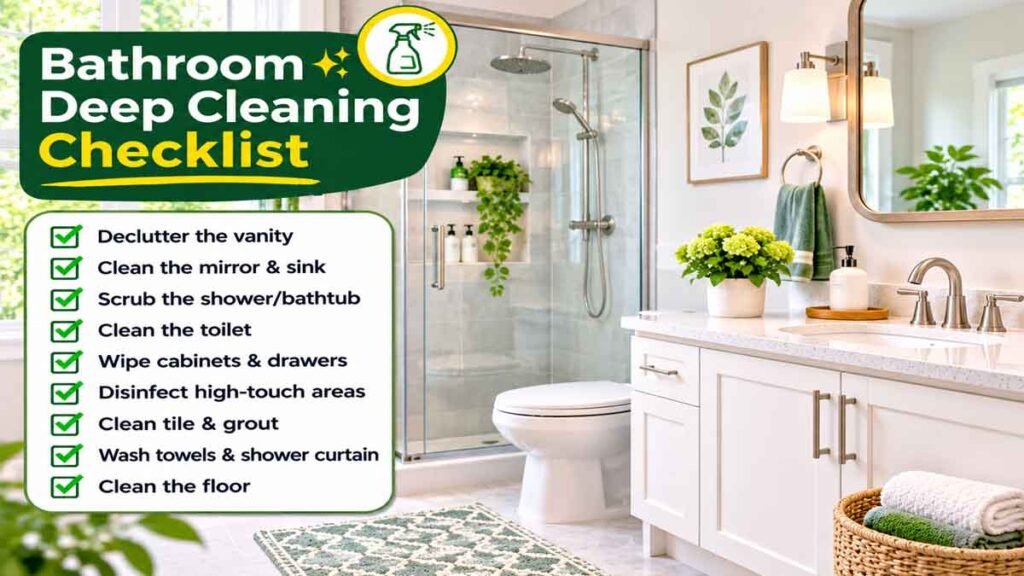
Bathrooms need regular attention because moisture, soap residue, and frequent use can make surfaces look dirty quickly.
Start by removing towels, toiletries, and loose items so you can reach the surfaces underneath.
1. Declutter the Vanity
Take unnecessary products off the bathroom counter.
Check personal care items and put the things you use regularly within easy reach.
Wipe suitable surfaces, including the countertop, cabinet fronts, and drawer handles.
If your bathroom is small, keeping the countertop relatively clear makes future cleaning easier.
2. Clean the Mirror and Sink
Mirrors often collect fingerprints and water spots.
Use a suitable glass-cleaning method and a clean cloth.
For the sink and faucet, choose cleaning products appropriate for the material and finish.
Pay attention to accessible edges and the area around the faucet.
3. Refresh the Shower or Bathtub
Check for soap residue and visible buildup on shower walls, doors, and fixtures.
Use surface-compatible cleaning products according to their labels.
Wash or replace shower curtains and liners when needed, following their care instructions.
If you notice persistent mold, water damage, or an ongoing leak, address the underlying moisture issue and seek appropriate professional help for significant contamination.
4. Clean the Toilet Area
Use bathroom-specific cleaning materials and keep them separate from cloths used in the kitchen.
Clean accessible exterior surfaces, handles, and surrounding floor areas.
For any toilet-cleaning product, follow its label instructions. Avoid combining different cleaners.
5. Improve Bathroom Ventilation
Moisture can linger after showers.
Check that the bathroom exhaust fan is working and remove dust from accessible exterior vent surfaces.
Using the fan or appropriate ventilation after bathing can help manage indoor moisture.
Bathroom Deep Cleaning Checklist
- Declutter vanity and countertops
- Clean mirror and sink
- Wipe faucet and cabinet handles
- Refresh shower and bathtub
- Wash appropriate bathroom fabrics
- Clean toilet and surrounding surfaces
- Check accessible grout and corners
- Wipe light switches
- Clean baseboards
- Finish the bathroom floor
How to Deep Clean Bedrooms

Bedrooms should feel comfortable and restful, but dust can collect around beds, nightstands, and upholstered furniture.
Learning how to deep clean a house room by room means giving these quiet spaces the same attention as busier areas.
1. Start With Bedding
Remove sheets, pillowcases, and washable bedding.
Follow each item’s care label.
Vacuum the mattress if recommended by its manufacturer, and check for dust underneath and around the bed frame.
Allow clean bedding to dry completely before putting it away or making the bed.
2. Dust Furniture and Shelves
Wipe dressers, nightstands, headboards, and accessible shelves.
Move small decorative items aside rather than dusting around them.
Don’t forget lamp bases, picture frames, and the tops of frequently used furniture.
3. Organize the Closet
Closets can become cluttered when clothes, shoes, and accessories don’t have designated places.
Remove items you no longer use and return frequently worn clothing to accessible areas.
Try grouping belongings by type rather than buying more storage boxes immediately.
The fewer unnecessary items you keep, the easier regular bedroom cleaning becomes.
4. Clean Under the Bed
Use a vacuum attachment to reach accessible spaces beneath the bed.
If the bed contains storage drawers, check for dust and forgotten items.
Avoid moving heavy furniture alone.
5. Refresh the Bedroom Floor
Vacuum carpets and rugs carefully.
For hardwood, laminate, or vinyl flooring, follow the manufacturer’s instructions and avoid excessive moisture.
A clean bedroom floor makes the entire room feel fresher.
Bedroom Deep Cleaning Checklist
- Wash bedding
- Dust nightstands and dressers
- Wipe accessible shelves
- Organize closet contents
- Clean under the bed
- Dust baseboards
- Clean mirrors
- Refresh washable curtains
- Vacuum or clean the floor
How to Deep Clean the Living Room
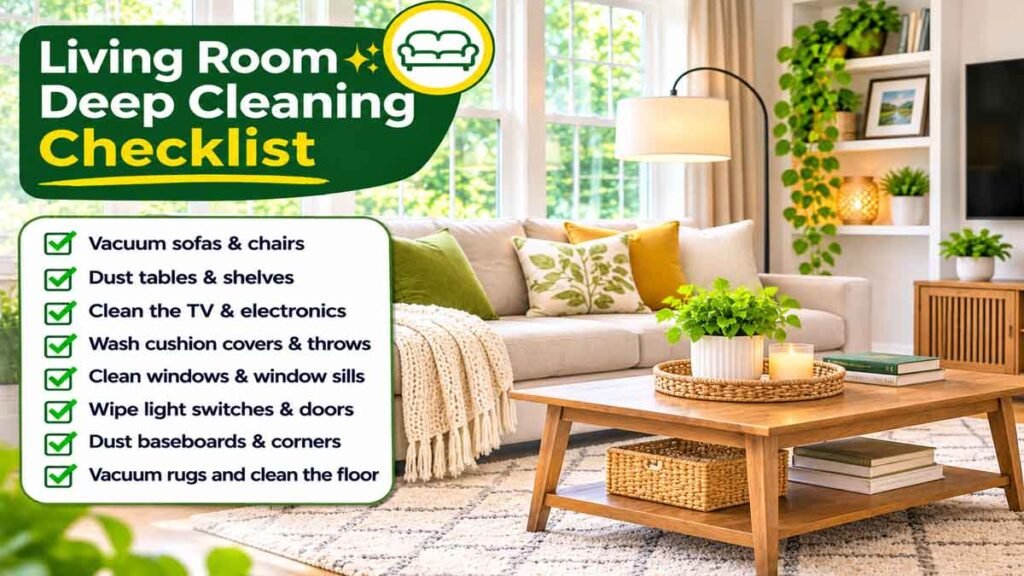
Living rooms handle plenty of daily activity.
People gather to watch television, relax, entertain guests, or work on personal projects.
As a result, upholstered furniture, rugs, and entertainment areas can collect dust and debris.
1. Clean Sofas and Chairs
Remove loose cushions where the furniture design permits.
Vacuum accessible seams and crevices with a suitable upholstery attachment.
Follow the upholstery care code before using any cleaning product on fabric.
For leather furniture, use methods recommended by the manufacturer.
2. Dust Tables and Shelves
Wipe coffee tables, side tables, bookcases, and display furniture.
Move small objects carefully so you can reach the surfaces underneath.
A microfiber cloth is often useful for collecting loose household dust.
3. Refresh the Entertainment Area
Dust accessible exterior surfaces around the television and entertainment center.
Use manufacturer-approved methods for screens and electronics.
Avoid applying household cleaning sprays directly to electrical equipment.
Tidy loose cables without blocking ventilation or placing strain on connections.
4. Pay Attention to Rugs and Carpets
Vacuum rugs and carpeted areas, including accessible edges.
Check the care label before attempting spot cleaning.
If a rug needs extensive treatment, professional cleaning may be more appropriate than experimenting with household products.
Living Room Deep Cleaning Checklist
- Vacuum sofas and chairs
- Dust tables and bookcases
- Clean accessible entertainment surfaces
- Refresh cushions and washable throws
- Dust baseboards
- Clean interior window surfaces
- Vacuum rugs
- Clean the floor
How to Deep Clean a Home Office

A home office may seem easier to maintain than a kitchen or bathroom, but paper clutter, dust, and tangled cables can make it surprisingly difficult to clean.
Start by removing unnecessary papers, empty cups, and loose stationery.
Wipe the desk using an appropriate method for its surface.
Clean accessible areas around the computer, keyboard, and monitor according to the manufacturers’ instructions.
Sort documents into three groups:
- Currently needed
- Important records
- Ready for secure disposal
Use a drawer organizer or a small desktop tray if it helps keep daily essentials in one place.
While rearranging the workspace, consider whether the existing furniture is comfortable for everyday use. Our guide to standard desk height explains common desk measurements and practical setup considerations.
Home Office Deep Cleaning Checklist
- Clear the desktop
- Sort unnecessary paperwork
- Dust shelves
- Clean suitable desk surfaces
- Refresh keyboard and monitor exteriors safely
- Organize accessible cables
- Wipe drawer handles
- Vacuum the floor
How to Deep Clean Entryways, Hallways, and Stairs
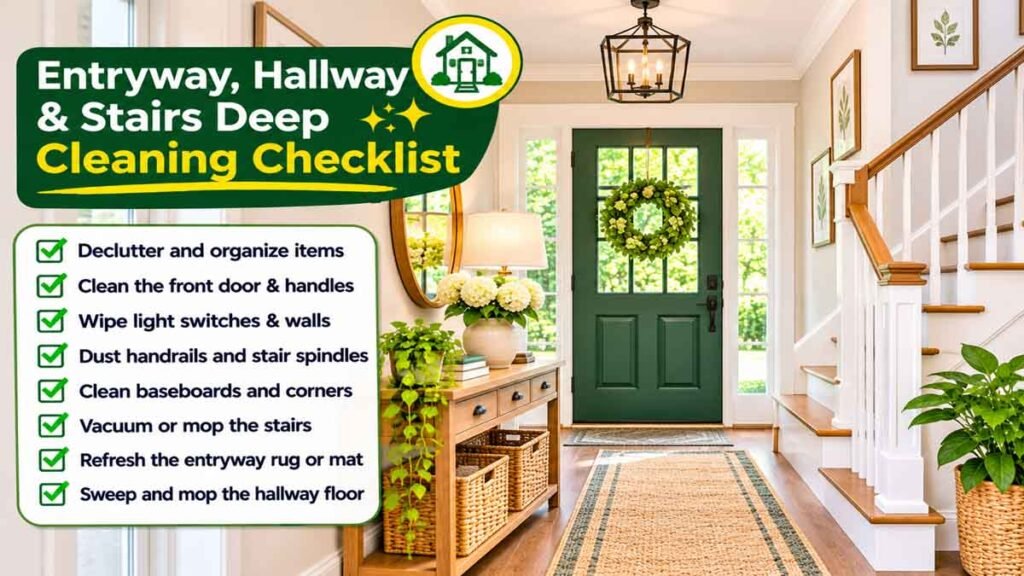
These areas are easy to overlook, yet they connect almost every part of the home.
Shoes, bags, jackets, and deliveries can quickly turn an entryway into a cluttered space.
Start by removing items that belong elsewhere.
Organize everyday shoes and outerwear so they don’t block walkways.
Clean accessible door surfaces, handles, and light switches.
Dust handrails and baseboards, then vacuum or mop according to the floor material.
For stairs, work carefully and keep the steps free from loose objects and cleaning equipment.
Entryway and hallway tasks include:
- Organize shoes and bags
- Dust accessible shelves
- Clean door handles
- Wipe handrails
- Dust baseboards
- Clean suitable floor surfaces
- Wash or vacuum the entry mat
A clear entryway makes the rest of the home feel more welcoming.
How to Deep Clean a Laundry Room
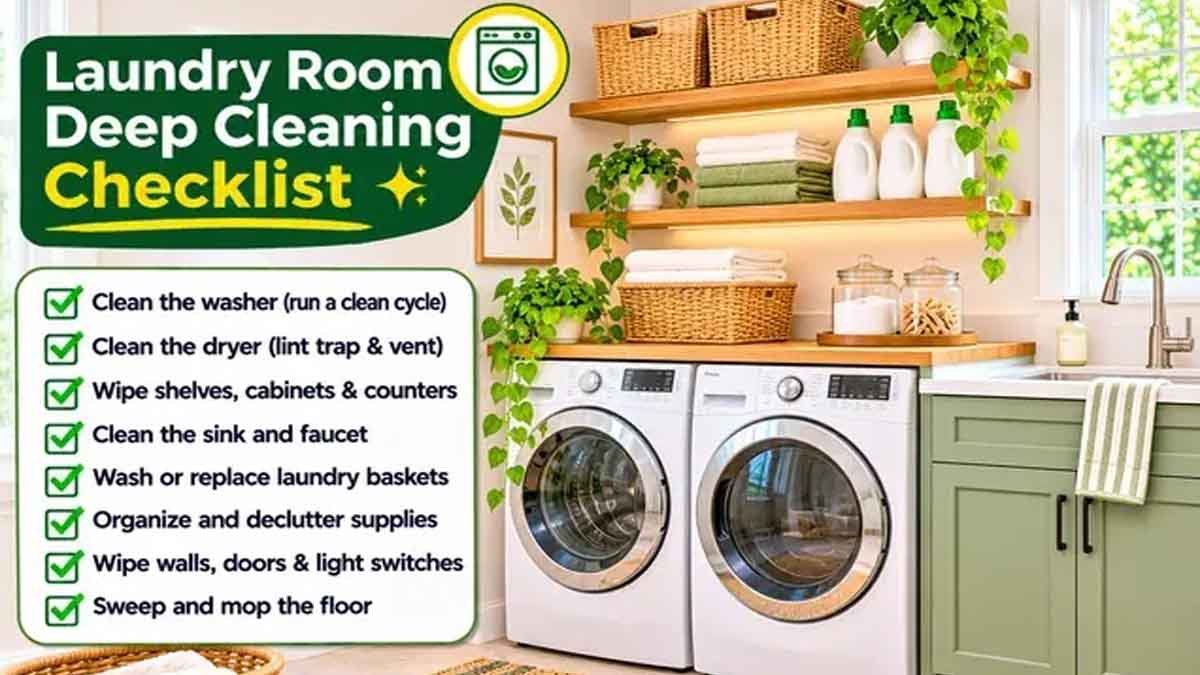
A laundry room doesn’t need to be large to become cluttered.
Detergent containers, clothing, cleaning supplies, and baskets can occupy most of the available space.
Begin by organizing the laundry area.
Remove empty containers and put away supplies that aren’t frequently used.
Wipe accessible shelves and cabinet exteriors.
Check the washing machine and dryer manuals for recommended maintenance and cleaning procedures.
For dryers, follow manufacturer guidance for lint filter and vent maintenance. If ventilation performance is poor or the vent needs more extensive servicing, arrange professional assistance.
Keep laundry products stored securely in their original containers.
Laundry Room Deep Cleaning Checklist
- Clear shelves and counters
- Organize laundry supplies
- Wipe exterior appliance surfaces
- Check appliance maintenance recommendations
- Clean accessible shelving
- Refresh laundry baskets
- Sweep and mop the floor
The Overlooked Places in a Whole-House Deep Cleaning
Even after cleaning every main room, some small areas may still need attention.
These details are easy to miss because they’re rarely part of ordinary cleaning routines.
Use this checklist during your final walk-through.
| Often-Missed Area | What to Check |
|---|---|
| Baseboards | Dust and marks |
| Light switches | Fingerprints and visible dirt |
| Door handles | Frequent-touch buildup |
| Window tracks | Loose dust and debris |
| Accessible vent covers | Dust accumulation |
| Cabinet handles | Grease and fingerprints |
| Furniture legs | Dust around the base |
| Under accessible furniture | Hidden debris |
| Interior doors | Smudges and marks |
| Trash cans | Residue and odor |
Prioritize anything visibly dirty instead of feeling that every surface must receive equal attention.
A Practical Two-Day Deep Cleaning Schedule
One of the easiest ways to deep clean a house room by room is to spread the work over a weekend.
For many households, two shorter sessions are more manageable than an exhausting single-day cleaning marathon.
Here’s an example schedule for a small or medium-sized home.
Day 1: Kitchen, Bathrooms, and Bedrooms
| Task | Planning Time |
|---|---|
| Gather supplies and declutter | 30 minutes |
| Kitchen deep cleaning | 90 minutes |
| Bathroom cleaning | 60 minutes |
| Bedroom cleaning | 60–90 minutes |
| Breaks and final tidy | As needed |
These are illustrative planning estimates. Actual cleaning time depends on the home’s size and condition.
Start with the kitchen while you have enough energy for the most involved work.
Continue with the bathroom and finish with the bedrooms.
If the kitchen needs more attention than expected, move a bedroom task to the next day rather than rushing.
Day 2: Living Areas and Final Touches
| Task | Planning Time |
|---|---|
| Living room | 60 minutes |
| Home office | 30 minutes |
| Hallways and entryway | 30 minutes |
| Laundry room | 30 minutes |
| Whole-house floor check | 45–60 minutes |
Adjust these times freely.
If you live in a small apartment, you may finish several tasks sooner. Larger homes and homes with pets may require extra sessions.
The point of a weekend cleaning schedule is to create a realistic structure, not a race against the clock.
Deep Cleaning a House in One Day vs. One Weekend
Should you complete everything in one day?
That depends on the size of your home and how much cleaning it needs.
| Factor | One-Day Plan | Two-Day Plan |
|---|---|---|
| Best for | Smaller homes | Medium or larger homes |
| Cleaning approach | Priority tasks | More detailed room cleaning |
| Flexibility | Limited | Greater |
| Breaks | Need careful planning | Easier to schedule |
| Ideal outcome | Essential areas refreshed | More thorough coverage |
For a small apartment, one day may be enough.
For a larger family home, dividing the work into several sessions often produces a better result without unnecessary fatigue.
It’s also fine to clean one room each evening over a week.
A manageable plan is more useful than an ambitious checklist that never gets finished.
How to Maintain a Clean Home After Deep Cleaning
Deep cleaning feels satisfying, but the real benefit comes from making ordinary maintenance easier.
You don’t need to repeat the entire process every weekend.
Instead, build a few small habits into your routine.
Daily Habits
- Return frequently used objects to their places.
- Clear kitchen counters after meal preparation.
- Put dishes away regularly.
- Keep walkways free of clutter.
- Deal with small spills promptly using appropriate methods.
Weekly Habits
- Vacuum frequently used floors.
- Clean bathrooms and sinks as needed.
- Wash bedding according to household needs.
- Dust commonly used surfaces.
- Empty trash containers.
- Review clutter in high-traffic rooms.
Monthly Habits
- Check cabinet shelves and drawer interiors.
- Clean overlooked corners.
- Refresh frequently used appliances according to their manuals.
- Review storage areas for unnecessary items.
- Check high-touch surfaces and baseboards.
Small, consistent tasks can make the next house deep cleaning considerably easier.
Deep Cleaning Tips for Homes With Pets or Allergies
Some households need additional attention because of pet hair, tracked-in dirt, or sensitivity to dust and fragrances.
If you have pets, vacuum their favorite resting areas more frequently and wash suitable pet bedding according to its care instructions.
Use a vacuum appropriate for your flooring and household needs. A model with effective filtration may be useful when controlling fine household dust.
For people sensitive to fragrances, consider unscented or fragrance-free cleaning products where available.
The American Lung Association notes that fragrances can bother some people, especially those with respiratory sensitivities.
Ventilation matters, too.
Let fresh air circulate when conditions allow and follow product safety directions.
If you encounter extensive mold, persistent moisture, or unusual contamination, don’t treat it as an ordinary cleaning task. Resolve the underlying problem with qualified help.
Common Deep Cleaning Mistakes to Avoid
Even a detailed deep cleaning house checklist won’t help much if your cleaning process creates more work.
Here are some common mistakes and better alternatives.
Mistake 1: Cleaning Before Decluttering
Trying to wipe surfaces while they’re covered with household objects takes unnecessary time.
Better approach: Remove clutter first, then clean the exposed surfaces.
Mistake 2: Starting With the Floors
If you mop the floor before dusting shelves, loose dust may settle on the freshly cleaned surface.
Better approach: Work from higher surfaces toward the floor.
Mistake 3: Using the Same Cloth Everywhere
Carrying one dirty cloth from the bathroom into the kitchen can spread unwanted residue and germs.
Better approach: Keep cloths separated by cleaning area and launder reusable materials appropriately.
Mistake 4: Using Products on Unsuitable Surfaces
A cleaner intended for one material may damage another.
Better approach: Check manufacturer instructions and product labels before cleaning sensitive finishes.
Mistake 5: Mixing Household Cleaning Products
Combining different cleaning chemicals can create dangerous reactions.
Better approach: Never mix cleaning products. Use them individually as directed and keep them in their original labeled containers.
Mistake 6: Trying to Finish Everything at Once
A whole-house cleaning project can be physically tiring.
Better approach: Divide the work into manageable sessions, take breaks, and focus on completing the most important tasks.
Mistake 7: Forgetting Regular Maintenance
Waiting months to clean every heavily used surface makes the next deep cleaning harder.
Better approach: Keep up with small weekly tasks and reserve deep cleaning for less frequently maintained areas.
Frequently Asked Questions
How do I start deep cleaning a house that is very dirty?
Start with basic decluttering and the most frequently used rooms. Remove ordinary trash, clear walking areas, and identify the surfaces that need attention. Break the work into smaller sessions instead of attempting to clean the entire home immediately.
If the house has serious contamination, sewage damage, extensive mold, or other hazardous conditions, professional assistance may be needed.
What is the best order to deep clean a house?
A practical order is to declutter, dust higher surfaces, clean furniture and counters, attend to frequently used fixtures, and finish with floors. Many people prefer beginning with kitchens and bathrooms because these rooms require the most attention.
How long does it take to deep clean a house?
It varies considerably. A small apartment may take several hours, while a larger or more cluttered home could require multiple days. The amount of clutter, household size, and level of dirt often matter more than square footage alone.
Should I deep clean before or after organizing?
Usually, light decluttering comes first. Remove unnecessary items and clear surfaces so you can clean properly. Once the area is clean and dry, organize the belongings you’re keeping.
You don’t need to reorganize every drawer before starting.
What is the difference between regular cleaning and deep cleaning?
Regular cleaning handles everyday tasks such as dishes, countertops, and frequently used floors. Deep cleaning includes less frequently maintained places, such as baseboards, cabinet interiors, accessible spaces beneath furniture, and detailed appliance cleaning.
Can I deep clean my house without expensive supplies?
Yes. Many routine household tasks can be handled with microfiber cloths, a vacuum, a mop, and a few appropriate cleaning products. Expensive gadgets aren’t necessary for every home. Choose tools based on actual cleaning needs and surface compatibility.
What should be included in a whole-house deep cleaning checklist?
A useful checklist should cover the kitchen, bathrooms, bedrooms, living room, home office, entryway, laundry area, floors, and overlooked surfaces. Organizing the checklist by room helps prevent tasks from being forgotten.
Is deep cleaning necessary every month?
Not necessarily. Frequently used areas may benefit from more detailed monthly attention, but a complete whole-house deep cleaning can often be scheduled less frequently. Adjust your routine according to household activity, visible dirt, and individual needs.
Final Thoughts
Learning how to deep clean a house room by room is easier when you stop treating the entire home as one enormous task.
Start with the rooms that need the most attention. Clear unnecessary clutter, work systematically, and use a practical checklist to keep track of progress.
Some spaces may take longer than expected. That’s normal.
A realistic cleaning routine doesn’t require every room to look perfect all the time. It simply makes your home easier to maintain, more comfortable to live in, and less overwhelming to care for.
Save this deep cleaning checklist for your next seasonal refresh, and adapt it to fit the way your household actually lives.